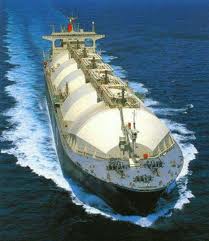
Minister for Petroleum and Natural Resources Dr Asim Hussain said on Thursday that Pakistan plans to import 500 Million British Thermal Unit (mmbtu) LNG from Qatar to meet its energy requirements.
Hussain told the National Assembly during the question hour that an agreement to this effect has been signed with Qatar and added that the price of LNG is yet to be decided between the two countries.
However, he said, that the price will be in accordance with the prevailing international prices in the region.
The minister expressed with confidence that the supply of LNG from Qatar will be started within one and a half year.
Pakistan had signed a memorandum of understanding with Qatar in February for import of 500 mmcfd of LNG to generate 2,500 megawatts (MW) electricity.
Earlier this month, an official stated that Qatar has demanded for a hefty amount of $18 per mmbtu for LNG import to Pakistan.
Hussain told the National Assembly during the question hour that an agreement to this effect has been signed with Qatar and added that the price of LNG is yet to be decided between the two countries.
However, he said, that the price will be in accordance with the prevailing international prices in the region.
The minister expressed with confidence that the supply of LNG from Qatar will be started within one and a half year.
Pakistan had signed a memorandum of understanding with Qatar in February for import of 500 mmcfd of LNG to generate 2,500 megawatts (MW) electricity.
Earlier this month, an official stated that Qatar has demanded for a hefty amount of $18 per mmbtu for LNG import to Pakistan.
Textile and textile item manufacturers and exporters in Pakistan are aiming to increase their exports to the Russian Federation.
Although Russia has a huge market and the country depends to a large extent on imports for textile and clothing items, Pakistan's share in Russian imports is insignificant at present.
In an interview, Mr. Muhammad Farooq Afzal, Chairman, Pak-Russia Business Council, said, "The share of Pakistan in textile and textile item exports to Russian market, at the moment, is less than US$ 100 million, which is very less as Russia imports about US$ 10.775 billion of textiles and garments
every year."
Informing about the factors inhibiting Pakistan's textile and garment exports to Russia, he says, "From the Government side, there is no incentive or motivational step taken to promote and increase exports to the Russian Federation. Secondly, the private sector has a negative image as there are
payment problems in Russia."
Briefing about the steps being taken to improve Pakistan's textile and clothing exports to Russia, he says, "We are trying to improve our exports to Russia and for that the private sector would play a very vital role. Besides, we have given a proposal to the Pakistan Government as well as the Russian Government and associations, which if considered, would really boost our exports."
"Recently we have set up an Economic Cooperation Organization (ECO) Business Forum that includes 10 countries including Iran, Turkey, Afghanistan and Pakistan. Through the Forum, we are focusing on Ukraine and the Russian Federation. I hope the private sector has realized the potential of these markets and have directed their strategies towards these countries and I am pretty sure that our exports will rise," he concluded.
Although Russia has a huge market and the country depends to a large extent on imports for textile and clothing items, Pakistan's share in Russian imports is insignificant at present.
In an interview, Mr. Muhammad Farooq Afzal, Chairman, Pak-Russia Business Council, said, "The share of Pakistan in textile and textile item exports to Russian market, at the moment, is less than US$ 100 million, which is very less as Russia imports about US$ 10.775 billion of textiles and garments
every year."
Informing about the factors inhibiting Pakistan's textile and garment exports to Russia, he says, "From the Government side, there is no incentive or motivational step taken to promote and increase exports to the Russian Federation. Secondly, the private sector has a negative image as there are
payment problems in Russia."
Briefing about the steps being taken to improve Pakistan's textile and clothing exports to Russia, he says, "We are trying to improve our exports to Russia and for that the private sector would play a very vital role. Besides, we have given a proposal to the Pakistan Government as well as the Russian Government and associations, which if considered, would really boost our exports."
"Recently we have set up an Economic Cooperation Organization (ECO) Business Forum that includes 10 countries including Iran, Turkey, Afghanistan and Pakistan. Through the Forum, we are focusing on Ukraine and the Russian Federation. I hope the private sector has realized the potential of these markets and have directed their strategies towards these countries and I am pretty sure that our exports will rise," he concluded.
Strike of Edible Oil Tankers Association will continue today (Tuesday) on 10th consecutive day after no breakthrough in talks between the association and oil and ghee mill owners,Express News 24/7 reported.Chairman edible oil tankers association Bakhtawar Khan said that strike would continue till withdrawal of cases and provision of security.
Owing to suspension of edible oil and ghee supply, commodity prices have increased. In Karachi ghee price has reached at Rs.185 from Rs.160 per kg. In Lahore and Islamabad, ghee is being sold at Rs. 180 per kg.
Meanwhile, Oil Tankers Association has also announced to continue their strike on second consecutive day.
Vice chairman Oil Tankers Association Shams Shehwani has said that the fuel supplies throughout the country had been suspended and would remain so until and unless NLC was ousted from the supply chain.
Owing to suspension of edible oil and ghee supply, commodity prices have increased. In Karachi ghee price has reached at Rs.185 from Rs.160 per kg. In Lahore and Islamabad, ghee is being sold at Rs. 180 per kg.
Meanwhile, Oil Tankers Association has also announced to continue their strike on second consecutive day.
Vice chairman Oil Tankers Association Shams Shehwani has said that the fuel supplies throughout the country had been suspended and would remain so until and unless NLC was ousted from the supply chain.
National Fertilizer Marketing Limited (NFML)was supplying imported urea of worth millions of rupees to fake dealers in different cities of Punjab, A number of DCOs sent to their reports to Director FIA Punjab Lahore revealed.
It is to be recalled that an inquiry in NFML, wherein Rs 300 billion were embezzled last year, was yet to be completed when the above-mentioned scam surfaced in Gujranwala Division. FIA Lahore has started inquiry into the scam, sources in NFC said.
They said that DCO Gujranwala, in a letter addressed to Director FIA Lahore, pointed out the massive irregularities in distribution of imported urea in districts of Gujranwala division. The DCO was informed by Agriculture Department. The detailed report of DCO made eye opening revelations and stated that only within 16 days from December 19, 2011 to January 06, 2012 1360 tons urea was dispatched to 84 untraceable dealers in Gujranwala, Sialkot, Gujrat, Narowal, Hafizabad and Mandi Bahauddin districts.
Urea was supplied to a total of 191 dealers, out of whom, 107 were notified and traceable while 84 dealers were untraceable. The report further read that total quantity dispatched to dealers was 2840 tons out of which 1480 tons was supervised and traceable while 1360 was dispatched to undisclosed locations.
As per details, major chunk of the embezzled urea was dispatched in Gujranwala district i.e. 1980 tons, out of which, 975 tons was traceable and 1005 tons was dispatched to untraceable dealers. Similarly minimum quantity of 30 tons was dispatched to Narowal district, out of which, 30 tons was supervised while 20 tons was dispatched to untraceable dealers.
It is worth mentioning here that last year powerful group comprising federal ministers, elected officials, and senior civil servants allegedly embezzled Rs300 billion through the illegal dumping, smuggling, and black-marketing of fertilizer imported by the government.
The government subsidizes the urea by making the NFML sell it at far below global import rates, importing it at around Rs.2,550 per 50-kilogram bag and selling it for Rs. 1,050 per bag. “Over 50% of the imported urea (500,000 tons) simply did not reach its destination,” says the report.
When this scribe contacted NFC chairman Khalid Malik on his cell phone to know his version on the issue, his cell was attended by a man who introduced himself as Rasheed and said that Mr Malik could only talk during office time and switched off the mobile phone.
It is to be recalled that an inquiry in NFML, wherein Rs 300 billion were embezzled last year, was yet to be completed when the above-mentioned scam surfaced in Gujranwala Division. FIA Lahore has started inquiry into the scam, sources in NFC said.
They said that DCO Gujranwala, in a letter addressed to Director FIA Lahore, pointed out the massive irregularities in distribution of imported urea in districts of Gujranwala division. The DCO was informed by Agriculture Department. The detailed report of DCO made eye opening revelations and stated that only within 16 days from December 19, 2011 to January 06, 2012 1360 tons urea was dispatched to 84 untraceable dealers in Gujranwala, Sialkot, Gujrat, Narowal, Hafizabad and Mandi Bahauddin districts.
Urea was supplied to a total of 191 dealers, out of whom, 107 were notified and traceable while 84 dealers were untraceable. The report further read that total quantity dispatched to dealers was 2840 tons out of which 1480 tons was supervised and traceable while 1360 was dispatched to undisclosed locations.
As per details, major chunk of the embezzled urea was dispatched in Gujranwala district i.e. 1980 tons, out of which, 975 tons was traceable and 1005 tons was dispatched to untraceable dealers. Similarly minimum quantity of 30 tons was dispatched to Narowal district, out of which, 30 tons was supervised while 20 tons was dispatched to untraceable dealers.
It is worth mentioning here that last year powerful group comprising federal ministers, elected officials, and senior civil servants allegedly embezzled Rs300 billion through the illegal dumping, smuggling, and black-marketing of fertilizer imported by the government.
The government subsidizes the urea by making the NFML sell it at far below global import rates, importing it at around Rs.2,550 per 50-kilogram bag and selling it for Rs. 1,050 per bag. “Over 50% of the imported urea (500,000 tons) simply did not reach its destination,” says the report.
When this scribe contacted NFC chairman Khalid Malik on his cell phone to know his version on the issue, his cell was attended by a man who introduced himself as Rasheed and said that Mr Malik could only talk during office time and switched off the mobile phone.
Industry representatives on Tuesday criticised the government for failing to restore supply of gas to the industry and urged it to fulfil its commitment as both trade and industry were in shamble due to suspension of gas. They said that on January 7th, a commitment was made with the industrialists, trade leaders and presidents of all chambers in the province that two-day gas supply to industry in Punjab would be restored on January 11 but it is very unfortunate on the part of the government that it could not fulfil its commitment.
And today is the 23rd day that the entire Punjab industry is without gas causing a loss of around Rs100 billion and putting at stake the jobs of 15 million people who are attached with the industry directly or indirectly. They said that who is responsible for the 4 million daily wagers who are attached with industry in Punjab.
If the authorities knew that they would not be able to restore gas, they should have at least taken their own people into confidence.
They said that now the business community was left with no other option but to evolve future strategy with the consultation of all the stakeholders including all the chambers in Punjab. They said that the continuous gas suspension has already marred industrial activity in the province, rendering thousands of industrial workers jobless and if the situation remains the same for the time to come, the economy would suffer irreversible loss.
The LCCI President Irfan Qaiser Sheikh said that the imminent industrial closures and massive lay offs would not only create trouble for the economy but would also hit the government reputation hard that is already facing challenges on various fronts.
He said that uncertainty is the most lethal thing for any business and the present regime is constantly keeping the entire business community into darkness about the real gas supply-demand situation.
He said that only because of bad governance the country’s exports have decline by 11 per cent in the month of December and would likely to suffer new lows if no heed was paid to solve the ongoing energy crisis.
“How the trade and industry would be able to pay the mark-up and other liabilities when there would be no productions. Only last year the industry was given gas for 200 days while it had paid mark-up of 365 days.”
He said that two different formulas are being applied in Pakistan. As in SNGPL there is a total gas suspension to the industry for the last 15 days and for CNG sector it is two and half days only while in SSGC the gas loadshedding for the industry is only for one day. “It seemed that the government was planning to destroy the entire industrial sector in Punjab and wants to make this country a trading place instead of a manufacturing hub.”
And today is the 23rd day that the entire Punjab industry is without gas causing a loss of around Rs100 billion and putting at stake the jobs of 15 million people who are attached with the industry directly or indirectly. They said that who is responsible for the 4 million daily wagers who are attached with industry in Punjab.
If the authorities knew that they would not be able to restore gas, they should have at least taken their own people into confidence.
They said that now the business community was left with no other option but to evolve future strategy with the consultation of all the stakeholders including all the chambers in Punjab. They said that the continuous gas suspension has already marred industrial activity in the province, rendering thousands of industrial workers jobless and if the situation remains the same for the time to come, the economy would suffer irreversible loss.
The LCCI President Irfan Qaiser Sheikh said that the imminent industrial closures and massive lay offs would not only create trouble for the economy but would also hit the government reputation hard that is already facing challenges on various fronts.
He said that uncertainty is the most lethal thing for any business and the present regime is constantly keeping the entire business community into darkness about the real gas supply-demand situation.
He said that only because of bad governance the country’s exports have decline by 11 per cent in the month of December and would likely to suffer new lows if no heed was paid to solve the ongoing energy crisis.
“How the trade and industry would be able to pay the mark-up and other liabilities when there would be no productions. Only last year the industry was given gas for 200 days while it had paid mark-up of 365 days.”
He said that two different formulas are being applied in Pakistan. As in SNGPL there is a total gas suspension to the industry for the last 15 days and for CNG sector it is two and half days only while in SSGC the gas loadshedding for the industry is only for one day. “It seemed that the government was planning to destroy the entire industrial sector in Punjab and wants to make this country a trading place instead of a manufacturing hub.”
The export target is under threat this year as shipments are likely to be $3 billion less than last year’s level of $25 billion because of energy shortages and resultant industry and labour inefficiency, default on loan repayments and India’s edge in the global market following around 16 per cent depreciation of its currency.
A somewhat similar scenario was portrayed by Trade Development Authority of Pakistan Chief Executive Tariq Puri last week when he said that despite performing well in first five months of the current fiscal year, exports might fall in coming months, the reasons being energy shortages and a sharp decline in cotton prices in the international market.
According to figures released later in the week, exports grew only four per cent to $11.3 billion in six months (July-December) of 2011-12. On the other side, imports jumped 19 per cent to $22.7 billion, leaving a deficit of $11.5 billion.
“Compared to last year, average exports have gone below $2 billion this year and going by the average total exports will be around $22 billion keeping in view a host of impediments faced by the industry,” said Anjum Nisar, former president of the Karachi Chamber of Commerce and Industry. Imports, however, are expected to increase to $45 billion by the end of the year in June, leaving a trade deficit of $23 billion.
Nisar said Pakistani exporters got a lukewarm response at the world’s largest textile exhibition – Heimtextil – in Germany recently apparently because of underperforming industries following suspension of gas supply in Punjab and power outages. “Some industrialists have even defaulted on loan repayments in recent months after closure of manufacturing units or running sharply below capacity due to energy problems.”
Besides the energy crisis, economic weakness in the European Union and the United States – the major export markets of Pakistan – has slowed down demand from the importers.
Nisar said the hefty depreciation of the Indian rupee had provided an edge to Indian exporters in the international market while “power outages and gas suspension have crimped our industries and affected efficiency of workers.”
The government, on its part, says it is working to cope with the energy crisis which will end in a few years. In an effort to give a boost to trade, it has signed free trade agreements with China and Malaysia and is expected to ink a preferential trade agreement with Indonesia this week.
“The government should pay more attention to reaching trade agreements with developed countries which have expertise in technology and engineering goods and can provide heavy machinery to modernise our industries,” said Khurram Schehzad, Research Head of InvestCap brokerage house. He particularly mentioned the agricultural sector which should be equipped with state-of-the-art technology and training of farmers to prop up the economy.
He pointed out that exports of the country mainly depended on outside factors, like the increase in cotton prices in the world market last year, and called for increasing competitiveness and going for diversification of exports, which mainly rely on textile. Industries like information technology, pharmaceutical products and leather goods have a potential to make great strides in the international market.
There has also been stress on lobbying and better and aggressive marketing of products in the world market to improve country’s exports. “If we improve quality of our products and export orders are met on time, then more buyers will come and rely on our products,” he said.
A somewhat similar scenario was portrayed by Trade Development Authority of Pakistan Chief Executive Tariq Puri last week when he said that despite performing well in first five months of the current fiscal year, exports might fall in coming months, the reasons being energy shortages and a sharp decline in cotton prices in the international market.
According to figures released later in the week, exports grew only four per cent to $11.3 billion in six months (July-December) of 2011-12. On the other side, imports jumped 19 per cent to $22.7 billion, leaving a deficit of $11.5 billion.
“Compared to last year, average exports have gone below $2 billion this year and going by the average total exports will be around $22 billion keeping in view a host of impediments faced by the industry,” said Anjum Nisar, former president of the Karachi Chamber of Commerce and Industry. Imports, however, are expected to increase to $45 billion by the end of the year in June, leaving a trade deficit of $23 billion.
Nisar said Pakistani exporters got a lukewarm response at the world’s largest textile exhibition – Heimtextil – in Germany recently apparently because of underperforming industries following suspension of gas supply in Punjab and power outages. “Some industrialists have even defaulted on loan repayments in recent months after closure of manufacturing units or running sharply below capacity due to energy problems.”
Besides the energy crisis, economic weakness in the European Union and the United States – the major export markets of Pakistan – has slowed down demand from the importers.
Nisar said the hefty depreciation of the Indian rupee had provided an edge to Indian exporters in the international market while “power outages and gas suspension have crimped our industries and affected efficiency of workers.”
The government, on its part, says it is working to cope with the energy crisis which will end in a few years. In an effort to give a boost to trade, it has signed free trade agreements with China and Malaysia and is expected to ink a preferential trade agreement with Indonesia this week.
“The government should pay more attention to reaching trade agreements with developed countries which have expertise in technology and engineering goods and can provide heavy machinery to modernise our industries,” said Khurram Schehzad, Research Head of InvestCap brokerage house. He particularly mentioned the agricultural sector which should be equipped with state-of-the-art technology and training of farmers to prop up the economy.
He pointed out that exports of the country mainly depended on outside factors, like the increase in cotton prices in the world market last year, and called for increasing competitiveness and going for diversification of exports, which mainly rely on textile. Industries like information technology, pharmaceutical products and leather goods have a potential to make great strides in the international market.
There has also been stress on lobbying and better and aggressive marketing of products in the world market to improve country’s exports. “If we improve quality of our products and export orders are met on time, then more buyers will come and rely on our products,” he said.
Pakistani rupee has come under considerable pressure against US dollar on account of more than expected weakness in the current account while, financial account has also failed to provide any support. Resultantly, the country’s foreign exchange reserves have declined to $16.7 billion for the week ending on December 02, from the high of $18.3 billion touch in mid-July. In addition, IMF’s loan repayment of $1.2b due in 2HFY12, with government showing intentions of not seeking new loan, is also weighing its weight on rupee-USD parity. “Resultantly, rupee has depreciated by 4.0 per cent against the green back in FY12YTD,” observed the analysts at Topline Research. In this scenario, the analysts said their initial assessment of rupee depreciating by 4-5 per cent against the US dollar in FY12, had turned out to be on the lower side. “We are revisiting our rupee-USD parity assessment,” they said.
Incorporating the recent developments that is more than expected, weakness in the current account (due to adverse commodity price shock), strained finance account (reduce FDI, outflow in portfolio investment and debt repayments particularly, towards 2HFY12). “We believe, rupee would depreciate by 7 per cent in FY12 to close the year around the levels of rupee 92 per USD in June, 2012. This is inline with last 20-yrs (FY91-11) average depreciation of 7.1 per cent, while it is above the last 10-years average of 4.1 per cent,” the analysts said.
POSITIVE IMPACT ON E&PS, IPPS, TEXTILE AND CHEMICALS SECTORS: With the dollar dominated revenue stream, we expect Oil and Gas E&P sector to benefit from the prevailing phenomenon. Within the sector, Pakistan Oilfields Limited (POL), stands out to be the chief beneficiary on account of higher portion of oil in its revenue mix, while positive impact on PPL remains on the lower side. Similarly, IPPs’ ROE component is indexed to rupee-US$ parity and thus, rupee depreciation would yield positively for listed IPP sector.
Furthermore, rupee-US$ parity, Pakistan’s textile exports would yield better returns in absolute terms benefiting export oriented companies.
With product prices and margins based on USD (PTA), LOTPTA would benefit from decline in rupee. However, this impact would be limited as PX, the primary raw material for PTA, would also be imported and exchange losses on $30 million foreign loan.
NEUTRAL TO NEGATIVE ON OMCs, AUTOS AND CEMENT SECTORS: For OMCs, sector would enjoy higher absolute margins on deregulated products like, furnace oil rendering into improved gross margins. For refinery sector, rupee depreciation would render into higher deemed duty in absolute terms. However, for both the sector exchange losses on account of higher reliance on imports will offset the incremental benefit. After continuous rise in Japanese Yen, rupee deprecation would further increase the import bill for auto assemblers, thus, adversely impacting the sector gross margins. Moreover, sector’s ability to pass on the cost pressures to final consumer would remain under question in heightened regulatory risk environment. Thus, we expect the phenomena to have a negative bearing on the sector. The recent depreciation of Pak rupee against USD would have a negative impact on cement sector as coal, major component, is an imported commodity. However, this impact would nullified for companies like Lucky, having higher export share in the revenue mix.
NEUTRAL IMPACT ON FERTILISER SECTOR: For fertiliser sector, rupee devaluation will have no major impact on urea manufacturers since, local urea prices are at approx 35 per cent discount and are primarily a function of local gas prices and curtailment. For producers, having DAP in their product mix (FFBL), the devaluation would slightly augment its profitability, given higher cost on imported phosacid will be more than compensated, by the gain on DAP prices.
Incorporating the recent developments that is more than expected, weakness in the current account (due to adverse commodity price shock), strained finance account (reduce FDI, outflow in portfolio investment and debt repayments particularly, towards 2HFY12). “We believe, rupee would depreciate by 7 per cent in FY12 to close the year around the levels of rupee 92 per USD in June, 2012. This is inline with last 20-yrs (FY91-11) average depreciation of 7.1 per cent, while it is above the last 10-years average of 4.1 per cent,” the analysts said.
POSITIVE IMPACT ON E&PS, IPPS, TEXTILE AND CHEMICALS SECTORS: With the dollar dominated revenue stream, we expect Oil and Gas E&P sector to benefit from the prevailing phenomenon. Within the sector, Pakistan Oilfields Limited (POL), stands out to be the chief beneficiary on account of higher portion of oil in its revenue mix, while positive impact on PPL remains on the lower side. Similarly, IPPs’ ROE component is indexed to rupee-US$ parity and thus, rupee depreciation would yield positively for listed IPP sector.
Furthermore, rupee-US$ parity, Pakistan’s textile exports would yield better returns in absolute terms benefiting export oriented companies.
With product prices and margins based on USD (PTA), LOTPTA would benefit from decline in rupee. However, this impact would be limited as PX, the primary raw material for PTA, would also be imported and exchange losses on $30 million foreign loan.
NEUTRAL TO NEGATIVE ON OMCs, AUTOS AND CEMENT SECTORS: For OMCs, sector would enjoy higher absolute margins on deregulated products like, furnace oil rendering into improved gross margins. For refinery sector, rupee depreciation would render into higher deemed duty in absolute terms. However, for both the sector exchange losses on account of higher reliance on imports will offset the incremental benefit. After continuous rise in Japanese Yen, rupee deprecation would further increase the import bill for auto assemblers, thus, adversely impacting the sector gross margins. Moreover, sector’s ability to pass on the cost pressures to final consumer would remain under question in heightened regulatory risk environment. Thus, we expect the phenomena to have a negative bearing on the sector. The recent depreciation of Pak rupee against USD would have a negative impact on cement sector as coal, major component, is an imported commodity. However, this impact would nullified for companies like Lucky, having higher export share in the revenue mix.
NEUTRAL IMPACT ON FERTILISER SECTOR: For fertiliser sector, rupee devaluation will have no major impact on urea manufacturers since, local urea prices are at approx 35 per cent discount and are primarily a function of local gas prices and curtailment. For producers, having DAP in their product mix (FFBL), the devaluation would slightly augment its profitability, given higher cost on imported phosacid will be more than compensated, by the gain on DAP prices.
The dollar witnessed strength against the rupee in the interbank market, dealers said on the first day of week. It initiated the day’s trading at Rs 88.98 for buying, increased Re 0.35 and closed at Rs89.33 for buying and Rs89.38 for selling, a fresh record low. The European currency decreased against the rupee as it began the day’s trading at Rs119.94 for buying, lost four paisas and closed at Rs119.9 for buying and Rs120.1 for selling. The pound sterling gained its value against local currency, it started the day’s trading at Rs139.49 for buying, went four paisas up and closed at Rs139.53 for buying and Rs139.73 for selling.
In open market the dollar gained against the rupee, dealers said. It started the day’s trading at Rs 89.25 for buying, increased five paisas and closed at Rs89.3 for buying and Rs89.85 for selling. The Euro recorded strength against local currency as it initiated the day’s trading at Rs118.3 for buying, went 70 paisas up and closed at Rs119 for buying and Rs120.5 for selling. The British pound witnessed upward slope against the rupee as it began the day’s trading at Rs137.8 for buying, rose Re1 and closed at Rs138.8 for buying and Rs140.5 for selling.
Meanwhile, karachi Stock Exchange witnessed bearish trend on Wednesday amid panic selling overwhelmed in the market across the board after a rumour about the fitness of President Asif Ali Zardari. The KSE-100 index shed by 88.32 points or 0.78 percent closing at 11,283.89 points compared to 11,372.21 points in the previous session.
The KSE-30 index was down by 150.55 points closing at 10,444.27 points as compared to 10,594.82 points. KMI.-30 index was down by 306.96 points and closed at 20,546.36 points compared to 20,853.32 points of the previous session. The KSE all shares index closed with a loss of 62.51 points closing at 7,881.86 points compared to 7,881.37 points of the previous session.
Losers beat gainers trading took place in 312 companies out of which 62 companies closed in positive and 143 in negative while the values of 107 companies remained intact.
Unilever Pak Foods and Al-Ghazi Tractors were the highest gainers and increased by Rs8.33 and Rs 5.79 to close at Rs1698.33 and Rs171.07 respectively.
Political situation of the country put its impact on Karachi bourse news about the removal of present government is the main reason of this type of trade activity in market, Shamoon Tariq analyst at Invisor Securities said in his analysis.
Rumour about President Zardari’s fitness and uncertainty on political front after NATO attack were also reasons for downward trend. On the other side, the price cut in urea impact on fertilizer sector, said Ahsan Mehanti Director Arif Habib Investment.
In open market the dollar gained against the rupee, dealers said. It started the day’s trading at Rs 89.25 for buying, increased five paisas and closed at Rs89.3 for buying and Rs89.85 for selling. The Euro recorded strength against local currency as it initiated the day’s trading at Rs118.3 for buying, went 70 paisas up and closed at Rs119 for buying and Rs120.5 for selling. The British pound witnessed upward slope against the rupee as it began the day’s trading at Rs137.8 for buying, rose Re1 and closed at Rs138.8 for buying and Rs140.5 for selling.
Meanwhile, karachi Stock Exchange witnessed bearish trend on Wednesday amid panic selling overwhelmed in the market across the board after a rumour about the fitness of President Asif Ali Zardari. The KSE-100 index shed by 88.32 points or 0.78 percent closing at 11,283.89 points compared to 11,372.21 points in the previous session.
The KSE-30 index was down by 150.55 points closing at 10,444.27 points as compared to 10,594.82 points. KMI.-30 index was down by 306.96 points and closed at 20,546.36 points compared to 20,853.32 points of the previous session. The KSE all shares index closed with a loss of 62.51 points closing at 7,881.86 points compared to 7,881.37 points of the previous session.
Losers beat gainers trading took place in 312 companies out of which 62 companies closed in positive and 143 in negative while the values of 107 companies remained intact.
Unilever Pak Foods and Al-Ghazi Tractors were the highest gainers and increased by Rs8.33 and Rs 5.79 to close at Rs1698.33 and Rs171.07 respectively.
Political situation of the country put its impact on Karachi bourse news about the removal of present government is the main reason of this type of trade activity in market, Shamoon Tariq analyst at Invisor Securities said in his analysis.
Rumour about President Zardari’s fitness and uncertainty on political front after NATO attack were also reasons for downward trend. On the other side, the price cut in urea impact on fertilizer sector, said Ahsan Mehanti Director Arif Habib Investment.
FBR authorities have caught Philip Morris Pakistan (PMP), formerly known as Lakson Tobacco Company and owned by Philip Morris International, for massive tax evasion in their imported brand of cigarettes. Federal Board of Revenue (FBR) has issued show-cause notice to PMP asking them to pay evaded tax amounting Rs300 million. Company was paying tax on import price while according to law tax should be paid on retail price. Company declared import price as retail price. Documents available with Profit reveal that scheme used to inflict this damage to national exchequer was patently simple but brazenly fraudulent. Marlboro with actual imported price of more than Rs140 was declared valued and priced by PMP at less than half its real value at Rs64; thus real reducing tax liability. No FBR official was ready to speak on record against tax evasion because of certain political pressures but confident that PMP has deprived national exchequer of million of rupees. Sources said that for past many months, FBR had been investigating this matter in order to determine mechanism adopted for evasion of duty and taxes at import stage. During this exercise, it was revealed that PMP had been evading federal excise and sales tax and other taxes through under invoicing on their import of Marlboro cigarettes into Pakistan. An official, who was also part of investigation, told Profit that it was duty evasion that had been going on for more than two years and damage inflicted was at least Rs300 million. It was shocking to learn that purpose of this tax evasion fraudulent scheme was to deliberately keep prices of Marlboro cigarette packets low thereby inflicting a huge loss to national exchequer. He said according to rules, tax is collected on retail price but PMP declared import price as retail price. “In retail price, all taxes like import price, excise duty and sales tax is included but PMP declared import price as retail price,” he said adding that the notices have been served. It is learnt that as soon as relevant officers of FBR finished their investigation, formal show cause notices were issued to PMP asking them to pay evaded taxes amounting to over Rs300 million. According to sources, PMP’s reply to these notices was found to be unsatisfactory and rather aloof which left no choice for FBR but to take stern formal action for tax evasion against PMP. Hence, a final contravention report has been issued directing its field formations to recover evaded amount along with penalties and surcharges amounting to over a billion rupees.
Import payments and negative regional sentiment on currencies drove the rupee to close near its record low on Friday, dealers said.The rupee ended at 87.75/80 to the dollar, weaker than Thursday's close of 87.64/67, but still shy of its record low of 87.92 in September.However in the TOM (one-day forward) market, it traded at 87.95 according to dealers."Next week there are fewer payments so the pressure may ease, however there is generally a weak sentiment about the economy," said a dealer at a foreign bank.Pakistan's foreign exchange reserves fell to $16.96 billion in the week ending Nov. 18, after hitting a record $18.31 billion in the week ending July 30.There was also some concern following the International Monetary Fund's (IMF) assessment that the outlook for Pakistan's economy for the current fiscal year ending June 2012 was "challenging", dealers said.In a statement on Tuesday, the IMF said that ongoing security concerns were likely to limit capital inflows.
Dealers said the rupee was under pressure despite rising remittances from overseas Pakistanis, which rose to $1.02 billion in October, compared with $855.11 million in October 2010.
The local currency could also experience downward pressure in the days ahead due to a widening current account deficit, which stood at a provisional $1.5 billion in the July-Oct period, compared with $541 million in the same period last year.
In the money market, overnight rate ended at its top level of 11.90 percent, amid tight liquidity in the interbank market.
China has overtaken the United States to become the world's largest smartphone market by volume although the US still leads in terms of revenue, a market research firm said Wednesday.
Strategy Analytics said that smartphone shipments hit 24 million units in China during the third quarter of the year compared to 23 million units in the United States.
"The United States remains the world's largest smartphone market by revenue, but China has overtaken the United States in terms of volume," said Strategy Analytics executive director Neil Mawston.
"China is now at the forefront of the worldwide mobile computing boom," Mawston said. "China has become a large and growing smartphone market that no hardware vendor, component maker or content developer can afford to ignore."
Strategy Analytics said smartphone shipments in China grew 58 percent in the third quarter over the previous quarter to 23.9 million units and fell seven percent to 23.3 million units in the United States in the same period.
"China's rapid growth has been driven by an increasing availability of smartphones in retail channels, aggressive subsidizing by operators of high-end models like the Apple iPhone, and an emerging wave of low-cost Android models from local Chinese brands," Strategy Analytics director Tom Kang said.
Finland's Nokia leads China's smartphone market with 28 percent share while Taiwan's HTC heads the US smartphone market with 24 percent share, according to Strategy Analytics.
Strategy Analytics said that smartphone shipments hit 24 million units in China during the third quarter of the year compared to 23 million units in the United States.
"The United States remains the world's largest smartphone market by revenue, but China has overtaken the United States in terms of volume," said Strategy Analytics executive director Neil Mawston.
"China is now at the forefront of the worldwide mobile computing boom," Mawston said. "China has become a large and growing smartphone market that no hardware vendor, component maker or content developer can afford to ignore."
Strategy Analytics said smartphone shipments in China grew 58 percent in the third quarter over the previous quarter to 23.9 million units and fell seven percent to 23.3 million units in the United States in the same period.
"China's rapid growth has been driven by an increasing availability of smartphones in retail channels, aggressive subsidizing by operators of high-end models like the Apple iPhone, and an emerging wave of low-cost Android models from local Chinese brands," Strategy Analytics director Tom Kang said.
Finland's Nokia leads China's smartphone market with 28 percent share while Taiwan's HTC heads the US smartphone market with 24 percent share, according to Strategy Analytics.
The Indian rupee on Tuesday hit a record low against the dollar, as fears about eurozone debt and the global economy as well falling local stock markets provoked further selling of the currency.
The local unit plunged to 52.50 against the greenback as foreign exchange markets opened, causing further problems for the Indian central bank as it tries to rein in near double-digit inflation.
The weakening rupee is expected to fuel domestic inflation because oil imports priced in dollars will become more expensive, translating into higher prices for local consumers and businesses.
Forex dealers said the fall was due to investors fleeing riskier emerging market and eurozone assets, increasing demand for the dollar, which is seen as a safe-haven in times of crisis.
Dealers added that the rupee’s fall had been exacerbated by the finance ministry’s comments on Monday that the Reserve Bank of India had only a “limited” ability to arrest the partially convertible currency’s slide.
Media reports and analysts said the RBI had intervened for the first time in more than two months to try to quell the decline of the rupee, which has tumbled by about four percent against the dollar in the past six trading days.
“There’s no official confirmation but people think that’s the case,” said economist Siddartha Sanyal, from Barclays Capital.
“At this moment, the dynamics seem to be pretty much against all emerging market currencies and that’s not really helping the rupee,” he told AFP.
A fall in the domestic share market also weighed on the rupee Monday, with the blue-chip Sensex index of leading shares falling 2.6 percent to 15,946.10 points.
The Sensex was up 0.82 percent in early trade on Tuesday.
India is a net importer, with one-third of foreign goods made up of crude oil that is used to power the energy-hungry nation.
The rupee is the worst performing of Asia’s 10 most-traded currencies, having fallen around 14 percent since the start of 2011, while the 30-share benchmark Sensex index is faring worst among its regional peers, losing 22 percent in the same period.
Thirteen interest rate hikes since March 2010 have slowed India’s fast-paced economic growth but made little impact on rising prices.
Investors are also concerned about widespread corruption and a perceived lack of direction from the government, which has been embroiled in a series of corruption scandals for much of the past year.
The local unit plunged to 52.50 against the greenback as foreign exchange markets opened, causing further problems for the Indian central bank as it tries to rein in near double-digit inflation.
The weakening rupee is expected to fuel domestic inflation because oil imports priced in dollars will become more expensive, translating into higher prices for local consumers and businesses.
Forex dealers said the fall was due to investors fleeing riskier emerging market and eurozone assets, increasing demand for the dollar, which is seen as a safe-haven in times of crisis.
Dealers added that the rupee’s fall had been exacerbated by the finance ministry’s comments on Monday that the Reserve Bank of India had only a “limited” ability to arrest the partially convertible currency’s slide.
Media reports and analysts said the RBI had intervened for the first time in more than two months to try to quell the decline of the rupee, which has tumbled by about four percent against the dollar in the past six trading days.
“There’s no official confirmation but people think that’s the case,” said economist Siddartha Sanyal, from Barclays Capital.
“At this moment, the dynamics seem to be pretty much against all emerging market currencies and that’s not really helping the rupee,” he told AFP.
A fall in the domestic share market also weighed on the rupee Monday, with the blue-chip Sensex index of leading shares falling 2.6 percent to 15,946.10 points.
The Sensex was up 0.82 percent in early trade on Tuesday.
India is a net importer, with one-third of foreign goods made up of crude oil that is used to power the energy-hungry nation.
The rupee is the worst performing of Asia’s 10 most-traded currencies, having fallen around 14 percent since the start of 2011, while the 30-share benchmark Sensex index is faring worst among its regional peers, losing 22 percent in the same period.
Thirteen interest rate hikes since March 2010 have slowed India’s fast-paced economic growth but made little impact on rising prices.
Investors are also concerned about widespread corruption and a perceived lack of direction from the government, which has been embroiled in a series of corruption scandals for much of the past year.
Pakistan’s trade deficit fell to $1.71 billion in October from $1.78 billion in September, the Federal Bureau of Statistics said on Friday.But it was larger than the trade deficit in October last year, which was $1.25 billion.Exports fell to $1.89 billion in October, from $1.93 billion a year ago, according to the bureau. Imports totalled $3.60 billion in October, up from $3.19 in October last year. The trade deficit for the first four months of the 2011/12 fiscal year was $6.87 billion, compared with $5.23 billion in the same period a year earlier.Pakistan reported a trade deficit equivalent to 1842 Million USD in August of 2011. Pakistan exports rice, furniture, cotton fiber, cement, tiles, marble, textiles, clothing, leather goods, carpets and rugs and food products. Pakistan imports mainly petroleum, petroleum products, machinery, plastics, transportation equipment, edible oils, paper and paperboard, iron and steel and tea. Its main trading partners are: European Union, China, The United Arab Emirates and The United States. This page includes: Pakistan Balance of Trade chart, historical data and news.
A flurry of contradictory statements by the information minister and the commerce minister in a single day kept the answer to the question unclear: has Islamabad given India the status of the most-favoured nation (MFN) or not?
The issue of granting MFN status has been much-hyped in recent days, especially since the prime ministers of India and Pakistan are expected to meet during the Nov 10-11 Saarc summit in Maldives.
A cabinet meeting on Wednesday was to discuss the normalisation of trade with India.
Information Minister Dr Firdous Ashiq Awan told a crowded press conference that the cabinet meeting presided over by Prime Minister Yousuf Raza Gilani had ‘unanimously’ decided to grant India the MFN status to improve trade relations between the two countries.
Defending the coalition government’s decision, she said the step was taken in view of national and geo-strategic interests. “All stakeholders were taken into confidence, including our military and defence institutions,” she claimed, adding that no compromise would be made on national sovereignty. Furthermore, she said, the move would not affect Pakistan’s stance on the Kashmir issue — a sore point between the two countries that for decades has marred economic and trade relations.
When asked if Kashmiri leaders had been taken into confidence, the minister said the two parts of Kashmir were already trading across the Line of Control (LoC), bus services were operational, and that the Kashmiri leadership had been engaged on the issue.
To further justify her government move, Dr Awan gave the example of China, which has bolstered its trade relations with India despite having territorial disputes. “We cannot live in regional isolation,” she insisted.
However, a press note issued after the briefing by the commerce ministry did not mention that Pakistan had granted MFN status to India. It just said that the ministry apprised the cabinet on the current process of trade normalisation with India.
“The cabinet fully endorsed the efforts of the ministry for complete normalisation of trade relations and directed to implement in letter and spirit the decisions taken in this regard,” the statement read. It further said that the cabinet gave the ministry “the mandate to take the process of normalisation forward, which would culminate in the observance of MFN principle in its true spirit”.
When South Punjab News representative contacted Secretary Commerce Zafar Mehmood, who briefed the cabinet on the trade talks held so far with India, he too avoided saying that “MFN status for India had been granted” but admitted that it was a vital part of the trade normalisation process.
He elaborated that a roadmap for trade normalisation would be finalised during his meeting with his Indian counterpart in November. “But the entire trade liberalisation process is linked with the removal of non-tariff barriers (NTBs) by the Indian government,” he insisted.
India granted Pakistan MFN status in 1996, but Islamabad was reluctant to reciprocate arguing that India maintained a long list of NTBs that restrict Pakistan’s exports to India despite having the MFN facility.
Meanwhile, after the issuance of the commerce ministry statement when Dawn approached the information minister, she backtracked from her earlier announcement. Asked whether the cabinet had granted MFN status to India, she replied that the cabinet had granted approval to the secretary commerce to continue the trade normalisation talks with India.
“Commerce secretary cannot talk to India without the cabinet approval.” Ms Awan said the commerce secretary would meet
his Indian counterpart in India in mid-November to discuss ways to boost trade. “They will sign documents during the meeting,” she said but did not elaborate on the nature of the documents.
Statistics show that trade between the two countries was $1.4 billion in the year 2009-10. Of these, Indian exports to Pakistan stood at $1.2 billion, while Pakistan exports to India were a mere $268 million — clear proof that India had not opened up its market for Pakistani goods.
This is not surprising as Pakistan trades with India under the positive trade list. While Pakistan has allowed 1,946 items to be imported from India, the latter does not allow trade of 850 items from Pakistan.
Under the trade normalisation process, one issue would be the switching over from positive list to negative list based trade, and if word is to be believed then the ministry of commerce has already worked out a negative list in consultation with all stakeholders. This list is awaiting approval of the cabinet.
Meanwhile, responding to a supplementary question in the Senate, Minister for Commerce Amin Fahim said India had assured that it would support Pakistan in the World Trade Organisation for getting access to the European market. Mr Fahim, who did not inform the house about the cabinet proceedings whether it granted the MFN status to India or not, just referred to the one-time trade facility that the European Union announced last year for Pakistan to help the flood-affected people but that facility was blocked by India in January last.
The issue of granting MFN status has been much-hyped in recent days, especially since the prime ministers of India and Pakistan are expected to meet during the Nov 10-11 Saarc summit in Maldives.
A cabinet meeting on Wednesday was to discuss the normalisation of trade with India.
Information Minister Dr Firdous Ashiq Awan told a crowded press conference that the cabinet meeting presided over by Prime Minister Yousuf Raza Gilani had ‘unanimously’ decided to grant India the MFN status to improve trade relations between the two countries.
Defending the coalition government’s decision, she said the step was taken in view of national and geo-strategic interests. “All stakeholders were taken into confidence, including our military and defence institutions,” she claimed, adding that no compromise would be made on national sovereignty. Furthermore, she said, the move would not affect Pakistan’s stance on the Kashmir issue — a sore point between the two countries that for decades has marred economic and trade relations.
When asked if Kashmiri leaders had been taken into confidence, the minister said the two parts of Kashmir were already trading across the Line of Control (LoC), bus services were operational, and that the Kashmiri leadership had been engaged on the issue.
To further justify her government move, Dr Awan gave the example of China, which has bolstered its trade relations with India despite having territorial disputes. “We cannot live in regional isolation,” she insisted.
However, a press note issued after the briefing by the commerce ministry did not mention that Pakistan had granted MFN status to India. It just said that the ministry apprised the cabinet on the current process of trade normalisation with India.
“The cabinet fully endorsed the efforts of the ministry for complete normalisation of trade relations and directed to implement in letter and spirit the decisions taken in this regard,” the statement read. It further said that the cabinet gave the ministry “the mandate to take the process of normalisation forward, which would culminate in the observance of MFN principle in its true spirit”.
When South Punjab News representative contacted Secretary Commerce Zafar Mehmood, who briefed the cabinet on the trade talks held so far with India, he too avoided saying that “MFN status for India had been granted” but admitted that it was a vital part of the trade normalisation process.
He elaborated that a roadmap for trade normalisation would be finalised during his meeting with his Indian counterpart in November. “But the entire trade liberalisation process is linked with the removal of non-tariff barriers (NTBs) by the Indian government,” he insisted.
India granted Pakistan MFN status in 1996, but Islamabad was reluctant to reciprocate arguing that India maintained a long list of NTBs that restrict Pakistan’s exports to India despite having the MFN facility.
Meanwhile, after the issuance of the commerce ministry statement when Dawn approached the information minister, she backtracked from her earlier announcement. Asked whether the cabinet had granted MFN status to India, she replied that the cabinet had granted approval to the secretary commerce to continue the trade normalisation talks with India.
“Commerce secretary cannot talk to India without the cabinet approval.” Ms Awan said the commerce secretary would meet
his Indian counterpart in India in mid-November to discuss ways to boost trade. “They will sign documents during the meeting,” she said but did not elaborate on the nature of the documents.
Statistics show that trade between the two countries was $1.4 billion in the year 2009-10. Of these, Indian exports to Pakistan stood at $1.2 billion, while Pakistan exports to India were a mere $268 million — clear proof that India had not opened up its market for Pakistani goods.
This is not surprising as Pakistan trades with India under the positive trade list. While Pakistan has allowed 1,946 items to be imported from India, the latter does not allow trade of 850 items from Pakistan.
Under the trade normalisation process, one issue would be the switching over from positive list to negative list based trade, and if word is to be believed then the ministry of commerce has already worked out a negative list in consultation with all stakeholders. This list is awaiting approval of the cabinet.
Meanwhile, responding to a supplementary question in the Senate, Minister for Commerce Amin Fahim said India had assured that it would support Pakistan in the World Trade Organisation for getting access to the European market. Mr Fahim, who did not inform the house about the cabinet proceedings whether it granted the MFN status to India or not, just referred to the one-time trade facility that the European Union announced last year for Pakistan to help the flood-affected people but that facility was blocked by India in January last.
Heritage crafts have taken a sudden and much needed turn towards fashion. Whether it’s the collaboration of the government organistation Aik Hunar Aik Nagar (Ahan) with designer Sahar Atif and the subsequent exhibition at the PFDC Sunsilk Fashion Week last year, or the Saarc initiative Saarc Business Association of Home Based Workers (Sabah) portraying their recent collection at Nepal, those working for the revival of craft have understood the need to marry heritage with fashion to create a viable product. The Express News 24/7 speaks to Saad Khan, CEO of Sabah Pakistan, upon his return from a fashion showcase in Nepal about female empowerment through craft and its future in fashion.
How does it help to have the Saarc countries involved in a women empowerment project such as Sabah?
There are projects that have previously worked towards women empowerment but in pockets. Sabah is different in this way because it’s based on a regional platform which leads to more exposure, outreach and impact. It provides an opportunity for artisan women workers from all Saarc countries to share their experiences and truly feel part of a larger community outside their own small rural settings. This has a huge impact on their self-esteem and allows for continuation and preservation of traditional embroidery skills.
On what level does Sabah manage to empower women involved with it?
It is our primary objective to economically empower women by creating income opportunities for them that can be sustained over a long period of time. Our members eventually graduate to small independent business owners that can sell their products to the market directly. We work very closely with them in areas of design, quality and what trends sell in the market. Most importantly we are providing them with a platform to market and sell their goods without exploiting their wages and earnings. We are a fair trade organisation and ensure that our members realise the value of their work. Our consumers also feel proud buying Sabah products since almost 40 per cent of the revenue goes directly to the home based women workers.
Does this initiative have any impact on Indo-Pak relations?
India is a huge market for Pakistani products, especially apparel. I believe that this collective effort will improve regional ties and create a sense of familiarity outside the usual norms, which so far have been through music and films. Not only does it impact Indo-Pak relations but it also brings us closer to other Saarc members, which are equally important for regional empowerment.
Which Sabah products interest buyers the most?
Our unique embroidery interests buyers and the fact that we fuse traditional and trendy to make products that are affordable. There is hardly any novelty factor to it but more so it is utility based. Sabah’s outlet in Islamabad is a lifestyle shop where you can purchase handmade quality products such as apparel, home textiles, gift accessories and blue pottery. Our shoe racks, laundry hampers, wooden trays and blue art pottery are customer favourites.
What local designers would you want to assist you with Sabah (and which have been doing so in the past)?
Nilofer Shahid has been a mentor to our designer for the recent Ananta Nepal programme. She guided our lead designer Aneela Urooj in the early stages of design development and fabric selection. Nickie and Nina also supported Sabah Pakistan at our very first Annual General Meeting and our home based women workers (members) were thrilled to see them sitting amongst them. It was a great show of support.
What did Sabah showcase in Nepal and what did the organisation learn from the exhibition?
Ananta Nepal was a celebration of the Home Based Women Workers in the Saarc region under the umbrella of Sabah projects. Sabah Pakistan showcased their Jisti collection which had a unique embroidery from the Hazara district. There were other designers present from Nepal and India as well. Our collection was widely appreciated by local and foreign press. The ramp show was followed by two days of an open house exhibition, where Sabah Pakistan was the only counterpart from the region to sell its entire stock. The response from the other Saarc country consumers was overwhelming
How does it help to have the Saarc countries involved in a women empowerment project such as Sabah?
There are projects that have previously worked towards women empowerment but in pockets. Sabah is different in this way because it’s based on a regional platform which leads to more exposure, outreach and impact. It provides an opportunity for artisan women workers from all Saarc countries to share their experiences and truly feel part of a larger community outside their own small rural settings. This has a huge impact on their self-esteem and allows for continuation and preservation of traditional embroidery skills.
On what level does Sabah manage to empower women involved with it?
It is our primary objective to economically empower women by creating income opportunities for them that can be sustained over a long period of time. Our members eventually graduate to small independent business owners that can sell their products to the market directly. We work very closely with them in areas of design, quality and what trends sell in the market. Most importantly we are providing them with a platform to market and sell their goods without exploiting their wages and earnings. We are a fair trade organisation and ensure that our members realise the value of their work. Our consumers also feel proud buying Sabah products since almost 40 per cent of the revenue goes directly to the home based women workers.
Does this initiative have any impact on Indo-Pak relations?
India is a huge market for Pakistani products, especially apparel. I believe that this collective effort will improve regional ties and create a sense of familiarity outside the usual norms, which so far have been through music and films. Not only does it impact Indo-Pak relations but it also brings us closer to other Saarc members, which are equally important for regional empowerment.
Which Sabah products interest buyers the most?
Our unique embroidery interests buyers and the fact that we fuse traditional and trendy to make products that are affordable. There is hardly any novelty factor to it but more so it is utility based. Sabah’s outlet in Islamabad is a lifestyle shop where you can purchase handmade quality products such as apparel, home textiles, gift accessories and blue pottery. Our shoe racks, laundry hampers, wooden trays and blue art pottery are customer favourites.
What local designers would you want to assist you with Sabah (and which have been doing so in the past)?
Nilofer Shahid has been a mentor to our designer for the recent Ananta Nepal programme. She guided our lead designer Aneela Urooj in the early stages of design development and fabric selection. Nickie and Nina also supported Sabah Pakistan at our very first Annual General Meeting and our home based women workers (members) were thrilled to see them sitting amongst them. It was a great show of support.
What did Sabah showcase in Nepal and what did the organisation learn from the exhibition?
Ananta Nepal was a celebration of the Home Based Women Workers in the Saarc region under the umbrella of Sabah projects. Sabah Pakistan showcased their Jisti collection which had a unique embroidery from the Hazara district. There were other designers present from Nepal and India as well. Our collection was widely appreciated by local and foreign press. The ramp show was followed by two days of an open house exhibition, where Sabah Pakistan was the only counterpart from the region to sell its entire stock. The response from the other Saarc country consumers was overwhelming
Pakistan's cabinet unanimously decided on Wednesday to grant India Most Favoured Nation status to liberalise trade between the two countries, Information Minister Firdous Ashiq Awan said, a move that could improve ties between the rivals."Today after an extensive briefing by the commerce secretary, the cabinet unanimously decided to grant India Most Favoured Nation status," Firdous told a news conference. Pakistan’s government announced Wednesday it would normalize trade with its giant rival and neighbor India, a sign of better ties between two nuclear-armed nations whose tense relations have long poisoned South Asia.
The decision to grant India ”Most Favored Nation” status would enable Pakistanis to export more goods to booming India at a time when Pakistan’s own economy is in the doldrums.
Some Pakistani business quarters welcomed the decision, but others expressed concerns about cheaper Indian goods flooding the market.
The World Bank estimates that annual trade between India and Pakistan is around $1 billion and could grow to as much as $9 billion if barriers are lifted. Much of the current trade is illicit products go through Dubai, where they are repackaged and are smuggled into both countries, meaning higher prices and less tax revenue.
Pakistani Information Minister Firdous Ashiq Awan did not say when the new rules would take affect, but said that the country’s powerful military, which dictates policy on India, agreed with the decision.
There was no immediate comment from India, which gave Pakistan MFN status in 1996 and has been waiting since then for it to be reciprocated.
Despite Wednesday’s move by Pakistan, no breakthrough is expected anytime soon in one of the world’s most intractable conflicts.
Granting a country MFN status means that countries trade on equal and improved terms, typically giving each other low tariffs and high import quotas.
Islamic groups and nationalists reared on hatred of mostly Hindu India complained that ”trading with the enemy” was a concession to New Delhi that should be resisted.
”Any move to enhance trade ties with India without solving the issue of Kashmir is an exercise in futility,” said Hafiz Hussain Ahmed, from the hardline Jamiat Ulema Islam party. ”Why is the government granting MFN status to a country that has destabilized Pakistan?”
Awan rejected that, saying Pakistan has similar agreements with 100 other countries and that ”Pakistan would continue to extend moral and diplomatic support to the Kashmiri people. The new trade agreement would not affect the cause of Kashmir.”
Hostility to India is deeply ingrained in Pakistan’s military, which for years has used the threat from the east as an excuse to gobble up most of the desperately poor country’s budget.
The decision to normalize trade appears to reflect a slight relaxing of its attitude toward New Delhi, perhaps because it is facing threats from Taliban militants in the northwest.
The decision to grant India ”Most Favored Nation” status would enable Pakistanis to export more goods to booming India at a time when Pakistan’s own economy is in the doldrums.
Some Pakistani business quarters welcomed the decision, but others expressed concerns about cheaper Indian goods flooding the market.
The World Bank estimates that annual trade between India and Pakistan is around $1 billion and could grow to as much as $9 billion if barriers are lifted. Much of the current trade is illicit products go through Dubai, where they are repackaged and are smuggled into both countries, meaning higher prices and less tax revenue.
Pakistani Information Minister Firdous Ashiq Awan did not say when the new rules would take affect, but said that the country’s powerful military, which dictates policy on India, agreed with the decision.
There was no immediate comment from India, which gave Pakistan MFN status in 1996 and has been waiting since then for it to be reciprocated.
Despite Wednesday’s move by Pakistan, no breakthrough is expected anytime soon in one of the world’s most intractable conflicts.
Granting a country MFN status means that countries trade on equal and improved terms, typically giving each other low tariffs and high import quotas.
Islamic groups and nationalists reared on hatred of mostly Hindu India complained that ”trading with the enemy” was a concession to New Delhi that should be resisted.
”Any move to enhance trade ties with India without solving the issue of Kashmir is an exercise in futility,” said Hafiz Hussain Ahmed, from the hardline Jamiat Ulema Islam party. ”Why is the government granting MFN status to a country that has destabilized Pakistan?”
Awan rejected that, saying Pakistan has similar agreements with 100 other countries and that ”Pakistan would continue to extend moral and diplomatic support to the Kashmiri people. The new trade agreement would not affect the cause of Kashmir.”
Hostility to India is deeply ingrained in Pakistan’s military, which for years has used the threat from the east as an excuse to gobble up most of the desperately poor country’s budget.
The decision to normalize trade appears to reflect a slight relaxing of its attitude toward New Delhi, perhaps because it is facing threats from Taliban militants in the northwest.
The State Bank of Pakistan (SBP) has directed commercial banks to ensure ATMs deliver cash during Eidul Azha holidays.According to a spokesman of SBP, the central bank has directed all commercial banks to ensure ATMs are operational to provide service to customers.
The banks have been told not let any complaints arise relating to the non-availability of cash at the ATMs during the five consecutive day holidays on the eve of Eidul Azha. The directives further make it mandatory for the banks to ensure sufficient availability of cash at the ATMs by posting the concerned staff during the holidays for this purpose.
In the currency market, on Wednesday, the rupee weakened to 86.80/85 to the dollar, compared with Tuesday's close of 86.78/85, amid increased import payments. The rupee had firmed in the previous trading sessions on healthy remittances from Pakistanis living abroad, but dealers said a widening current account deficit means that the local currency could experience downward pressure in days ahead. Country's current account deficit surged to a provisional $908 million in September, compared with a deficit of $201 million in the previous month. For the July-September quarter, the deficit was a provisional $1.209 billion, compared with $597 million in the same period last year, according to data from the State Bank of Pakistan. In the money market, overnight rates ended flat at 9.10 percent, because of increased liquidity in the interbank market.
MULTAN: PM’s daughter and goodwill ambassador for women’s rights Fizza Batool Gilani said South Punjab Women Chambers of Commerce and Industry (SPWCCI) could play a pivotal role in maximising skilled women’s contribution to industrial growth and overall national development.South Punjab Embroidery Institute and Khaddi Crafts Development (SPEIKCD) projects were being completed under Prime Minister Yousaf Raza Gilani’s visionary initiative of ‘Village Product Specialisation’ aimed at appreciating skills of the women and for their empowerment, said Fizza Gilani while addressing the office bearers of SPWCCI and women entrepreneurs at the local circuit house.
First Lady Fozia Gilani also graced the occasion as the guest of honour. Fizza Gilani said that active participation of skilled women in export-oriented manufacturing of novel and traditional items would not only be a substantial support to the national economy but also give financial freedom to women. She said that empowerment of women could be helpful in tackling problems, including poverty, terrorism and other social issues. She said that she want to see the skilled women of Multan emerge as the role model for women worker all over the world.
She said that all departments concerned, including TDAP and SMEDA should take matters of SPWCCI seriously and move forward with initiatives meant for women empowerment. She also urged men to encourage their female family members and cooperate with them. Fizza Gilani said that Pakistani women were courageous and their active participation in industrial and trade related activities would prove to be a milestone in Pakistan’s overall socio-economic development. She said that she enjoyed support from her father, Prime Minister Yousaf Raza Gilani and her brothers.
She said that PM Gilani was taking special interest in the development of South Punjab with particular focus on women empowerment. She said that she would remain in contact with the SPWCCI to get their problems resolved. SPWCCI president Masooma Sibtain, general secretary Filza Mumtaz and Farrukh Mukhtar also spoke on the occasion. The First Lady Fozia Gilani distributed shields and certificates among the best performing women entrepreneurs.
MULTAN,Sept 24th:Mian Anis Ahmed Sheikh and Khawaja Muhammad Hussain have been elected unopposed as President and Senior Vice President of Multan Chamber of commerce & Industry for 2011-12. Mian Anis Ahmed Sheikhis a younger brother of FPCCI's former President Tanvir Ahmed Sheikh.Member of Executive Committee (Corporate Class) Muhammad Shamim Khan, Mian Iqbal Hassan, Mian Muhammad Alamgir Jamil Khan, Khawaja Muhammad Hussain, Dr.Amna Mehmood Awan, Saleem Nasir. (Associate class)Mian Anis Ahmed Sheikh, Khawaja Muhammad Ali,Haseeb khan saddozai,Muhammad Asghar,Mirza Ali Ahmedand Ejaz Ahmed. Women seat:Mrs Mahnaz Fida Mughis 'A Sheikh.A formal announcement, however, would be made at the annual general meeting scheduled for September 30.
The newly elected MCCI head, Anis Ahmed Sheikh while talking to this scribe said that the main objective of the Chamber was the promotion of trade and industry and all available resources would be utilised for economic turnaround as the economic meltdown had now started taking its toll and everybody was suffering badly.He said that the business community would have to spend its energies for increasing exports, particularly the exports of non-traditional items. Sheikh said that high mark-up was crushing the whole industrial sector like anything and this needs to be taken care of by the concerned authorities. The Federal Board of Revenue should also focus on simplification of taxes as existing procedures were cumbersome in comparison with other economies of the world.Anis Sheikh said that research and development was an area, which, if was given proper attention, could do miracles. He said that the LCCI would, in collaboration with business community, work for the promotion of research culture in Pakistan.About his priorities called for executing the on-going projects initiated by the MCCI and tightening of belt to wear off the intensity of ongoing economic crisis. He, however, expressed fear that if the belt was not tightened by both the government and the private sector, the answer would be nothing else but more poverty and joblessness.He said that tight monetary policy was not the only solution to fast increasing inflation but it could be tackled easily by increasing production and cutting unnecessary expenditures. He said that the business community would have to spend its energies for increasing exports, particularly the exports of non-traditional items.


